Rethinking potential: Why inclusive employment is a smart business decision
By Shauna Marrone, Head of Vocational Services at Sonder
Across Australia, employers are facing a familiar challenge: finding and retaining the right people.
Skills shortages continue to affect industries nationwide, particularly in highly skilled and service-based roles. Yet while many organisations are looking for talent, capable candidates are still being overlooked because of assumptions that have little to do their ability to perform the job.
Recent findings from the Australian HR Institute, reported by the ABC, highlight the scale of the issue. In a survey of more than 600 business leaders and senior HR decision-makers, almost one-third of employers reported excluding candidates with a mental illness during recruitment. Others reported excluding applicants with a long-term illness, disability, or those aged over 55.
These findings reveal more than a social challenge. They expose a business risk.
One in five Australians experience a mental health challenge each year, and almost half will experience one in their lifetime. Despite how common and human these experiences are, people living with mental health challenges are significantly less likely to be employed and more likely to encounter stigma and discrimination when seeking work.
For employers, this represents both a missed opportunity and a chance to do things differently.
In a labour market where attracting and retaining talent remains difficult, employers cannot afford to narrow their talent pool based on outdated perceptions of mental health and disability. Inclusive employment is not simply the right thing to do – it is a practical strategy for building stronger, more resilient and more productive workplaces.
The business case for inclusion
Employment provides far more than financial security. It offers purpose, social connection, and a sense of identity. Research consistently shows that meaningful work can improve mental health outcomes, while prolonged periods outside the workforce can have the opposite effect.
There are benefits for employers, too.
Inclusive workplaces often experience stronger employee engagement, improved retention, better morale and greater workforce stability. Diverse teams bring broader perspectives, helping organisations solve problems more effectively and better understand the needs of their consumers and communities.
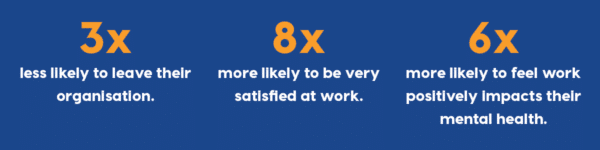
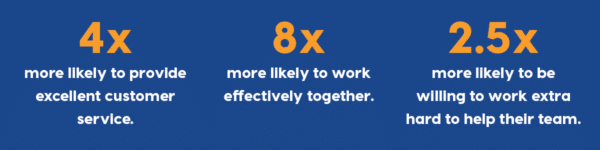
The Diversity Council of Australia’s The Case for Inclusion@Work 2023–2024 report found that employees working in inclusive teams experience significantly better workplace outcomes than those in non-inclusive environments.
Per the report, when compared to workers in non-inclusive teams, workers in inclusive teams are…
And when examined at the team-level, the index found that workers in inclusive teams are…
With that in mind, it’s little wonder that three in four Australian workers support their organisation taking action to create a more diverse and inclusive workplace. For organisations grappling with workforce shortages, inclusion is increasingly becoming a competitive advantage.
What inclusion actually means
Many organisations have made significant progress in improving diversity within their workforce. Recruitment targets, outreach initiatives, and broader talent searches have helped bring a wider range of people into workplaces than ever before. But diversity and inclusion are not the same thing.
Diversity is about who is present, while inclusion is about whether people feel respected and able to contribute once they are through the door.
A workplace can be diverse on paper, but if employees feel unable to disclose a mental health condition, ask for support, contribute ideas, or pursue advancement opportunities, it is not truly inclusive. Inclusion means creating an environment where people can participate fully and where differences are recognised as a source of value and strength.
This distinction matters because recruitment is only the beginning. The goal is not simply to bring diverse people through the door, it is to create workplaces where they can stay, grow, and realise their full potential.
The cost of stigma
Despite growing awareness and an expanding evidence base in favour of inclusion, stigma remains one of the most significant barriers to employment.
The AHRI findings highlight just how influential those attitudes can be. For many employers, the hesitation is not necessarily driven by malice. It often stems from uncertainty about how to provide support, concerns about team dynamics, or assumptions about a person’s ability to perform reliably in their role.
While these concerns may appear practical, they are often based on misconceptions rather than evidence.
For individuals living with mental health challenges, the consequences can be significant. Fear of judgement may discourage people from disclosing a mental health condition, requesting workplace adjustments or speaking openly about employment gaps. This can create additional stress for and prevent productive conversations about the support that may help them succeed.
A missed opportunity in a tight labour market
At a time when 36% of occupations in Australia are experiencing workforce shortages, businesses cannot afford to overlook capable candidates.
Yet the contradiction is clear: many organisations are struggling to find staff, while many people want to work continue to face barriers to employment.
People living with mental health challenges may bring the same qualities employers seek in any candidate: skills, qualifications, motivation, and the desire to build a meaningful career. Many also bring strengths that are highly valued in today’s workplace, including adaptability, problem-solving, and resilience developed through navigating complex life experiences.
Inclusion is often simpler than employers expect
One of the most persistent myths about employing someone living with mental health challenges is that it requires significant or costly changes to the workplace.
In reality, most adjustments are practical, low cost, and often beneficial for the wider workforce.
Flexible start and finish times, the option to work from home, access to quieter workspaces, clearer communication, regular check-ins, and support with task planning can all make a meaningful difference. In many cases, no adjustments are needed at all.
These are not extraordinary accommodations. They are examples of good management practice and the flexible, person-centred approaches increasingly adopted across modern workplaces.
Employers also have a legal obligation to make reasonable adjustments where required, unless doing so would cause unjustifiable hardship to the business. More importantly, providing these adjustments sends a clear message that a workplace values its people and is committed to supporting them to succeed.
The value of lived experience in the workforce
At Sonder, inclusive employment is something we advocate for through our Inclusive Employment Australia service, but it is also embedded in the way we operate.
Approximately 23% of our workforce identify as having a lived experience of mental health challenges. Across our mental health, alcohol and/or other drug, and community services, many of these employees work as peer practitioners, using their lived experience alongside formal training, supervision and professional practice frameworks to support others.
Peer practitioners often build trust quickly because they bring a different kind of expertise to the work. They understand, through personal experience, what it can feel like to navigate distress, stigma, recovery and change. That insight can help people feel understood, connected, and hopeful about what is possible.
Lived experience also strengthens teams. It brings different perspectives into service design, risk management, engagement strategies and day-to-day practice. It challenges assumptions, improves empathy, and helps organisations stay connected to the realities of the people they serve.
At Sonder, we see people with lived experience build meaningful careers, contribute at a high level and play a vital role in delivering positive outcomes for our clients and communities. Their contribution is not defined by what they have experienced, but by the insight and purpose they bring to their work.
Moving from intention to action
While many employers recognise the value of inclusion, the biggest challenge is knowing where to start.
Inclusive Employment Australia (IEA) is designed to bridge the gap between intention and action. Through Sonder’s IEA service, employers can access tailored, mental health-informed employment support, including access to pre-screened candidates, guidance on workplace adjustments, and ongoing support to help both employees and the workplaces succeed.
Our approach extends well beyond a single a single placement. We work alongside employers to build confidence, capability and sustainable employment outcomes.
Importantly, the service is government-funded, meaning there is no cost to access support. Employers may be eligible for additional financial supports, including up to $10,000 for eligible jobseekers.
Building workplaces that reflect the future
Workplaces are evolving. Expectations around flexibility, wellbeing and inclusion are now central to attracting and retaining talent.
The recent AHRI findings suggest many employers are still making decisions based on assumptions rather than capability. In a labour market where talent is increasingly difficult to find, that comes at a cost.
Inclusive employment is not about lowering standards. It is about recognising potential where others may overlook it.
Employers who invest in inclusive practices are not only creating opportunities for individuals. They are strengthening their workforce, improving organisational performance and positioning themselves for long-term success.
The question is no longer whether inclusive employment is the right thing to do. It is. The more important question is whether organisations can afford not to invest.
At Sonder, we are proud to partner with employers through Inclusive Employment Australia to build workplaces where people can contribute, grow and thrive.
If you are ready to access a broader talent pool, strengthen your team, and create a more inclusive workplace, we invite you to connect with our Inclusive Employment Australia team. Call us on (08) 7093 1801 or email info@sonderIEA.net.au.
To learn more about Inclusive Employment Australia, visit sonder.net.au/inclusive-employment-australia.